
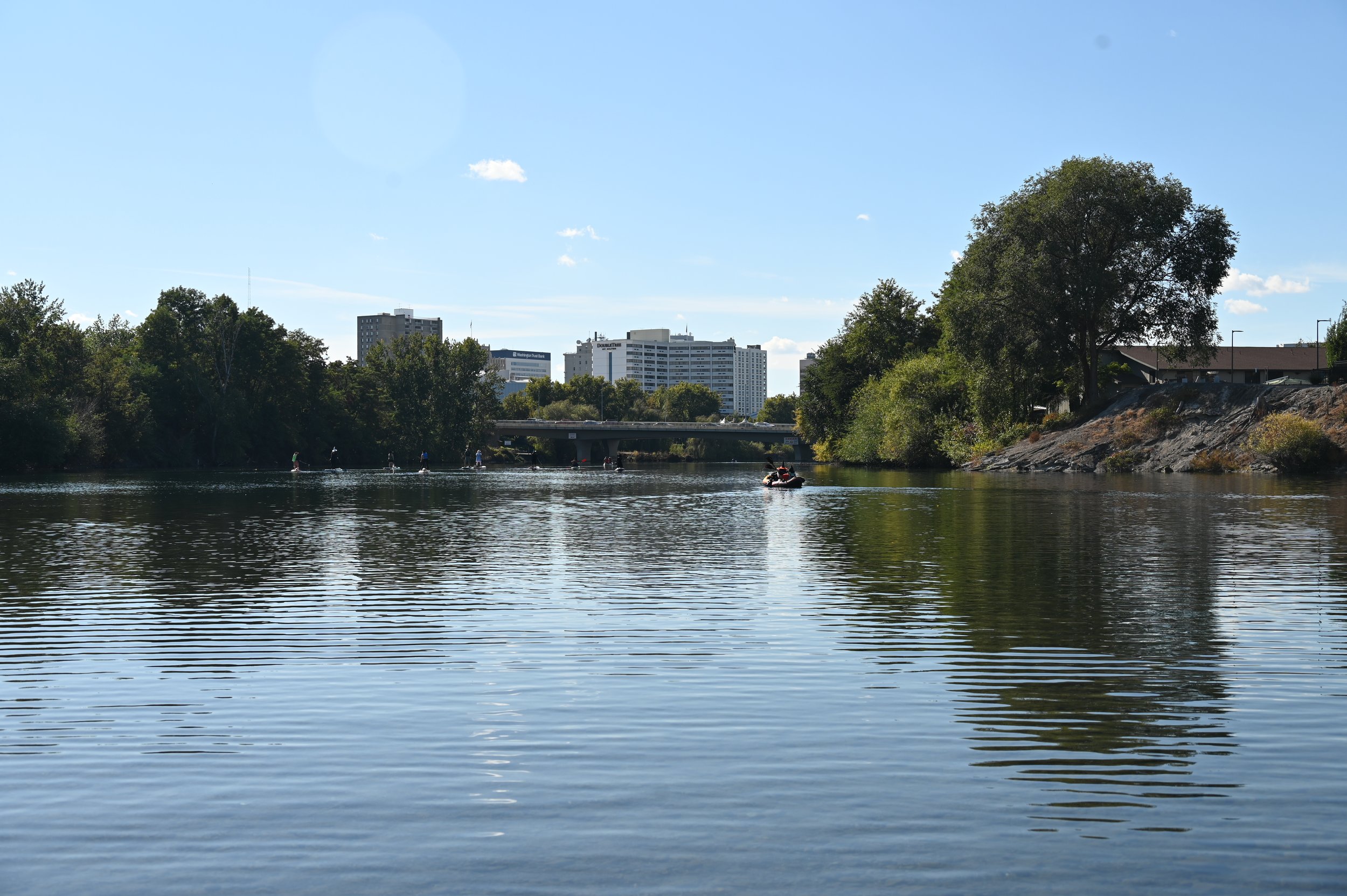
The Spokane River is more than water moving through our city. It’s where people float in the summer, cast a line at dusk, pause on the Centennial Trail, or sit quietly to breathe. It’s a place where generations have connected with the river, with each other, and with the land around it.
River access is not just about getting to the water. It’s about who can safely reach the water, who feels welcome, and who is excluded. For decades, access has been shaped by the choices of those who control the shoreline. That makes the question we face today simple: access for whom, and at what cost?
That question comes into sharp focus with the proposed dock at Ruby River Inn. A 2,200-square-foot floating structure is planned near downtown, described as a “public dock” for kayaking, paddleboarding, sightseeing, and other recreational uses. In reality, it is a massive private amenity dressed up as public access, and its footprint would extend deep into the main river channel, where paddlers, anglers, and community groups already use the river freely.
A Story of Dismissal
Spokane Riverkeeper has weighed in formally on this project multiple times, raising concerns about scale, safety, environmental impacts, and the dock’s lack of functional public access.
We asked for more than just nominal fixes. Our comments highlighted the need for clear public access routes, safe launch points for kayaks and canoes, and infrastructure that genuinely welcomes the community, including people with disabilities, and protects the river in the process.
In response, the developers thanked us for our input, reiterated that the dock is intended to serve the public, and added a couple free parking spaces and signs. On paper, this seems like progress.
That’s where the story stops matching reality. Parking and signs alone do not make a dock accessible. A staircase does not make it usable for people with disabilities. There is no safe way to launch a kayak or canoe. In reality, the dock remains a massive, 2,200 square feet structure that extends deep into the main river channel, dominating open water where paddlers, anglers, and community events already take place. The only way to reach it is a staircase, impossible for someone in a wheelchair and extremely difficult for anyone carrying a kayak or canoe. There is still no clear pathway that makes the dock usable by the general public.
This scale also carries environmental consequences. Anchoring and riverbed disturbance threaten fish and aquatic bird habitat, and the structure is vulnerable to seasonal high flows, putting both the river and river users at risk. Past docks in similar positions have failed during high water, creating hazards and debris downstream.
The developer’s responses are polite but dismissive. They reiterate intentions, regulatory compliance, and infrastructure promises, but intentions cannot replace real, usable public access or responsible stewardship of the river. The project continues to primarily serve hotel patrons, while the public and the environment bear the costs.
Privatization in Plain Sight
Structures like this matter because they set precedent. When private interests take over the river under the guise of public access, the shoreline shifts away from the community it belongs to. Open water that paddlers, anglers, and stewardship groups rely on is reduced. Visual access is diminished. Existing uses are obstructed.
Access cannot come at a cost to the river itself. This stretch of the Spokane River is already struggling to survive with reservoir conditions and dynamic flows, sensitive fish habitat and redband trout populations, and a delicate urban shoreline. A dock that prioritizes hotel patrons, ignores mobility access, and stretches far into the river does not meet the standard of true public benefit.
We are not against expanded river access. Spokane needs more ADA-accessible entry points, safe launches for non-motorized boats, thoughtful shoreline restoration, and infrastructure that genuinely welcomes the community. But structures that primarily serve private interests while impacting the river and existing users are not public access. They are privatization in plain sight. True access must be safe, equitable, and ecologically responsible, or it is no access at all.
Impacts Beyond the Shoreline
A dock isn’t just a platform over water, it changes the river itself. Large mid‑channel structures alter currents, disturb sediments, and reduce open‑water habitat that fish and other aquatic life rely on. Even metal “fish-friendly” designs can’t eliminate these effects: anchoring and in‑water disturbance disrupt the riverbed, and shade from structures changes light availability for plants and insects that form the base of the food web.
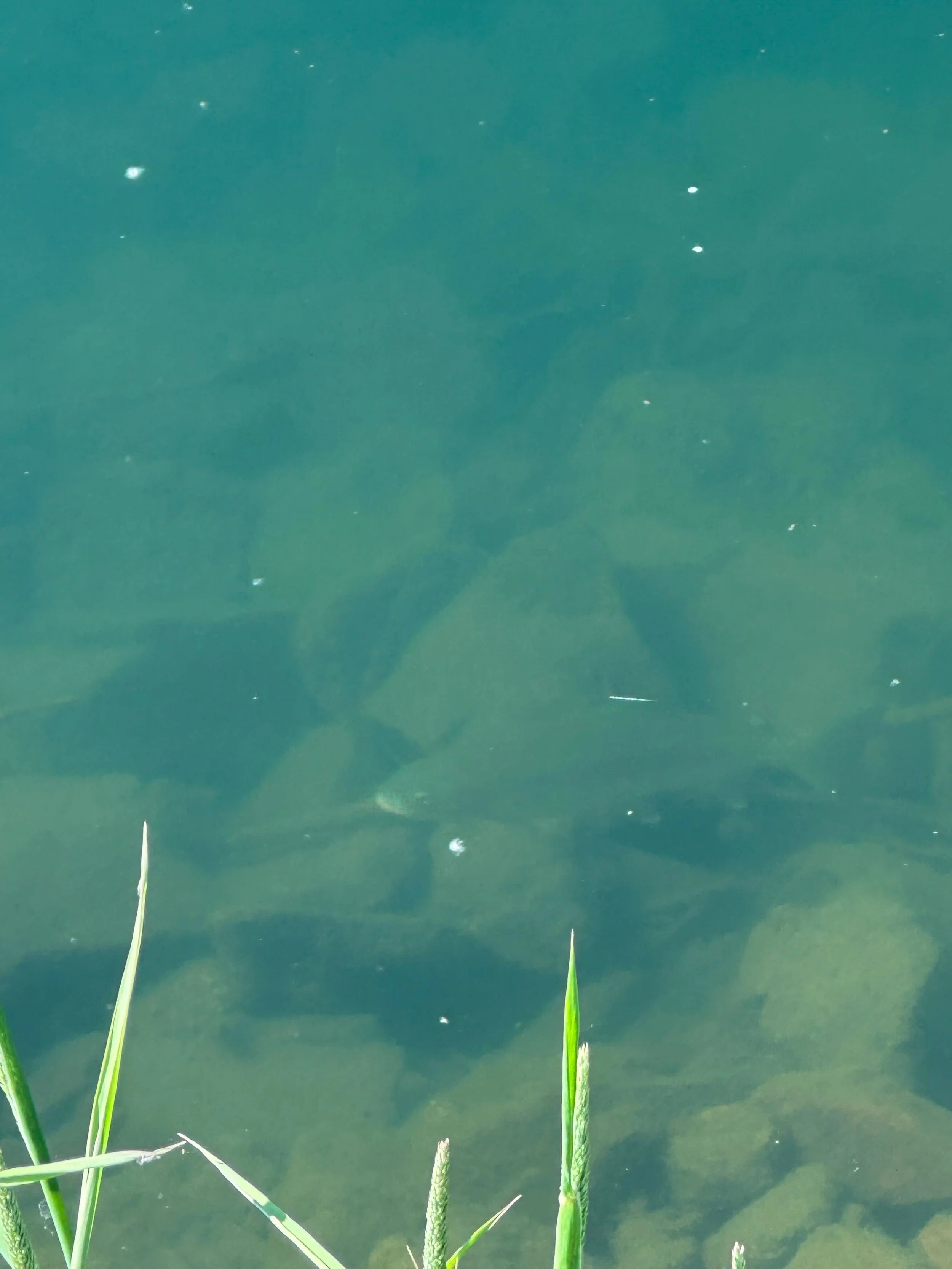
Redband trout spotted at the proposed dock location
This stretch of the Spokane River already faces significant ecological stress. Native redband trout numbers are far below their historic levels, and this species is considered an indicator of aquatic health in the basin. Anglers and fish lovers alike have reported watching redband trout in this area of the river through the summertime. The decline of redband trout has been linked to degraded habitat, warmer water temperatures, and sediment‑related impacts that reduce spawning and feeding opportunities for fish. But, this appears to be one of the areas they still have some habitat left they like.
Wildlife also responds to structures in ways that change ecological balance. An otter resting on a sculpture downstream might be a charming sight, but it underscores how animals use in‑water structures as perches and hunting platforms. Permanent docks can similarly create concentrated predation zones for birds, mammals, and larger predatory fish, increasing pressure on already vulnerable species and reducing safe refuge areas for juvenile fish.
And because the river is influenced by altered flow regimes, including reservoir‑like conditions below dams and urban runoff pressures, any in‑water structure amplifies existing stresses rather than buffering them. Water quality in the Spokane River continues to be shaped by temperature, and pollution challenges that stem from degraded shorelines and industrial discharges, which in turn makes habitat less hospitable for sensitive aquatic life.
True progress on river access must strengthen habitat, support wildlife, and preserve ecological function, not diminish it. Any project that claims to improve public access should do so in a way that ensures the river can continue to support the life that depends on it, rather than add another stressor in a reach already under strain.
What Comes Next
There is a public hearing before the City of Spokane Hearing Examiner on Thursday, February 26, 2026, at 9 a.m., Council Briefing Center, Lower Level of City Hall, 808 W. Spokane Falls Boulevard. Written comments may be submitted through February 23, 2026, at 5 p.m.
This is the moment for the community to speak up. The Ruby River Inn recreational dock may be proposed as a public facility, but the reality is it would privatize a section of our river and reduce access for the people who use it today. The Spokane River belongs to all of us. How we shape access, whose access we prioritize, matters for generations to come.