
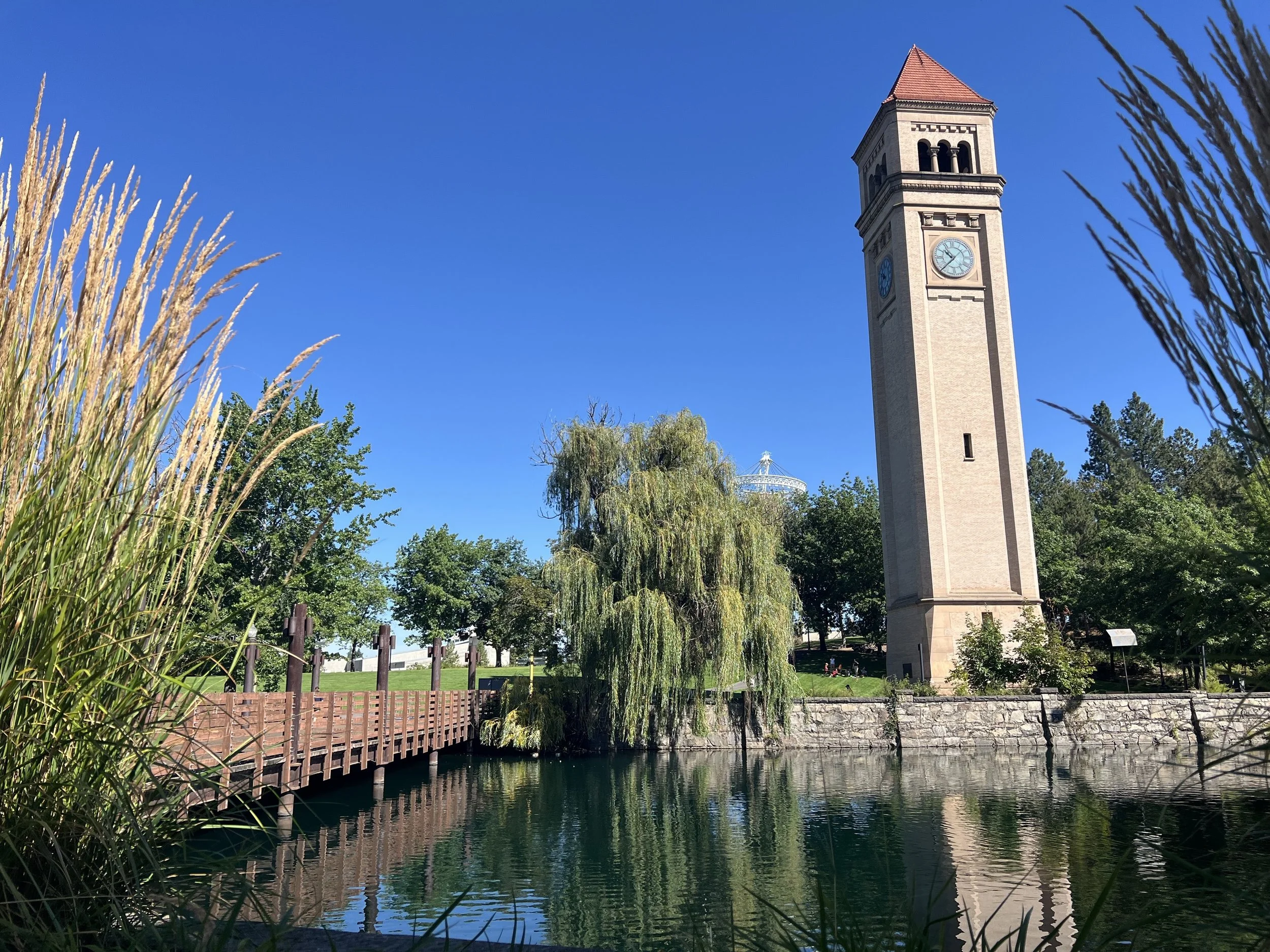
Our Clean Water Defense program has been busy advancing protections for the Spokane River. Here’s a look at some of the threats we’re addressing and the actions we’ve taken to keep the river healthy.

Sediment from Hangman Creek entering the Spokane River, February 2025.
Addressing Upstream Land Uses Impacting River Health
Runoff from agriculture and other land uses upstream carries sediment and nutrients into the Spokane River, harming water quality, fish habitat, and recreation. Hangman (Latah) Creek illustrates these impacts. Once a meandering stream flowing through prairie, forests, and dense riparian vegetation, it has been degraded by vegetation clearing, straightening, and erosion-prone soils. Winter rains wash sediment into the river, burying spawning gravels and isolating redband trout populations.
To address these threats, we submitted comments on Ecology’s TMDL priorities, calling for large-scale restoration in Hangman Creek, enforceable action against ongoing nonpoint pollution, and incorporation of dissolved oxygen and temperature targets to protect native fish and downstream water quality. Restoration projects are underway, but without strong enforcement, violations like unbuffered streambanks, dredging, and tillage runoff continue to undermine progress.
These concerns were echoed in our comments on the state’s draft Clean Water Guidance for Agriculture. The guidance is voluntary, but we emphasized that compliance with the Clean Water Act and Washington’s water pollution laws is mandatory, and that voluntary programs cannot replace enforceable protections. Guidance must support, not undercut, restoration efforts in the creek and across the basin, ensuring that farmers and landowners implement measures that truly protect water quality. Without clear, enforceable standards, upstream land uses will continue to undermine restoration efforts and water quality improvements.
PFAS Policy Advocacy
“Forever chemicals” like PFAS pose a growing threat to human health and the environment. As a continuation of our work to address PFAS in the river, we have been collaborating with the Waterkeeper Alliance to engage Congress on PFAS cleanup measures and source control efforts. Our advocacy aims to prevent further contamination and ensure harmful chemicals are removed from the places they already exist. Representatives from Washington and Oregon have been open to hearing our policy suggestions, and expressed support for these efforts.
Looking Ahead: Collaboration and Ongoing Advocacy
Protecting the Spokane River requires coordinated action. We work closely with community members, local environmental groups, and other Waterkeepers across Washington to track pollution, influence policy, and enforce water quality standards. These partnerships amplify our advocacy, allowing us to address multiple threats to the river and achieve meaningful, lasting improvements.
Clean water advocacy is ongoing and every voice matters. You can help by following along, submitting your own comments during public comment periods, or joining river monitoring and restoration activities. Together, we’re keeping the Spokane River safe, clean, and thriving for generations to come.