
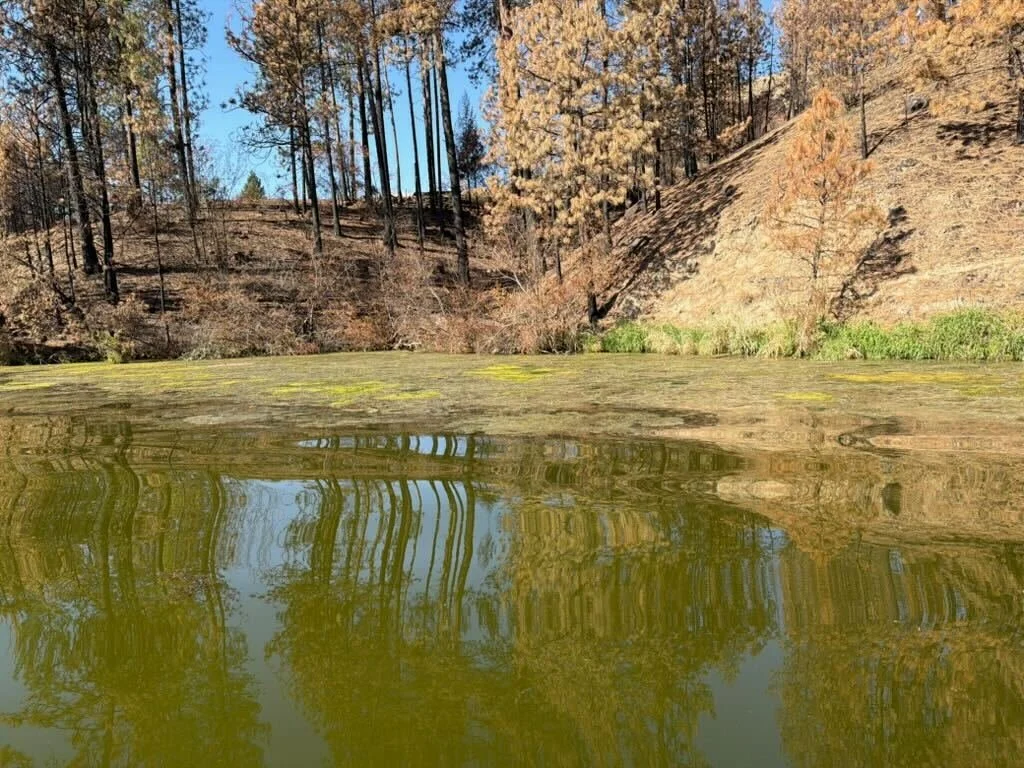
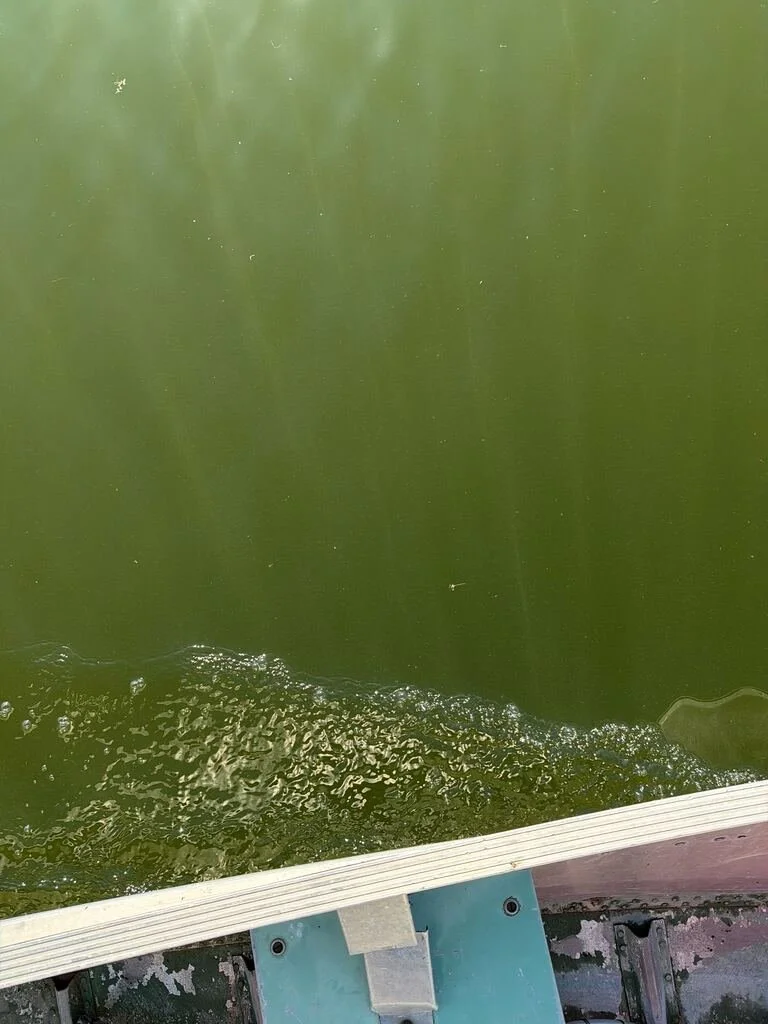
Algae blooms typically appear as murky green water and it’s impossible to know if they are toxic just by looking at them. A sample must sent into DOH.
Here at Spokane Riverkeeper, we collect a lot of data on water quality, so when a report of an algal bloom in Lake Spokane came in we jumped into gear. Lake Spokane has historically had harmful algal blooms due to the high levels of nutrients-mainly phosphorous- from upstream causing rapid algal growth. The decomposition of these algae then cause dissolved oxygen issues.
Harmful or toxic algal blooms can impact people who swim and accidently ingest water, or dogs that swim and then lick their coats or drink lake water. Some species of algae-actually cyanobacteria-can become toxic based on environmental conditions. At high levels they can be deadly, especially to pets.
Who is Monitoring Blooms?
Many people expect a government agency to take regular samples or keep an eye on local waters for signs of harmful algae, but the reporting system relies on the public. This comes as a surprise to many people. Previous sampling and identification of blooms came from local community groups, like the Lake Spokane Association and other concerned citizens. In a 2009 article in the Spokesman Review, a Long Lake resident stated about algal blooms:
“These come every year, so I just assumed that the government would be monitoring it. … We play in the lake all the time,” said Chaney, who has three children. “It could have been toxic for a month and nobody would have known because there’s not a monitoring program set up to keep on eye on it.”
That’s why when we received a report with a photo in September of 2026, we immediately called Spokane Regional Health District (SRHD). After consulting with the Department of Health, SRHD gave us the supplies to go out and collect a sample. The bloom was in a hard to reach area on the Stevens County side, so we sent our interns out with kayaks and sample bottles.
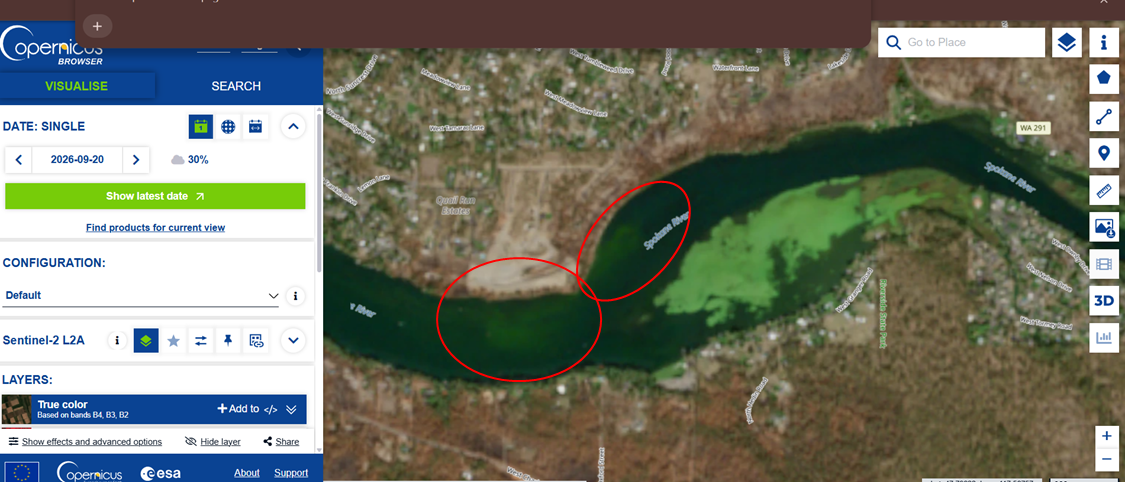
The blooms could been seen on the Copernicus satellite images, circled in red.
We also collected an additional sample for Dr. Nigel DeSouza, who specializes in cyanobacteria, at Gonzaga to look at. I wanted to know if cyanobacteria was present and possibly what kind.
The Results
In a few days SRHD returned the results of the sample showing very low levels of toxicity, below the action level, thankfully. However, Professor DeSouza, found cyanobacteria capable of producing toxin, confirming that sampling was necessary.
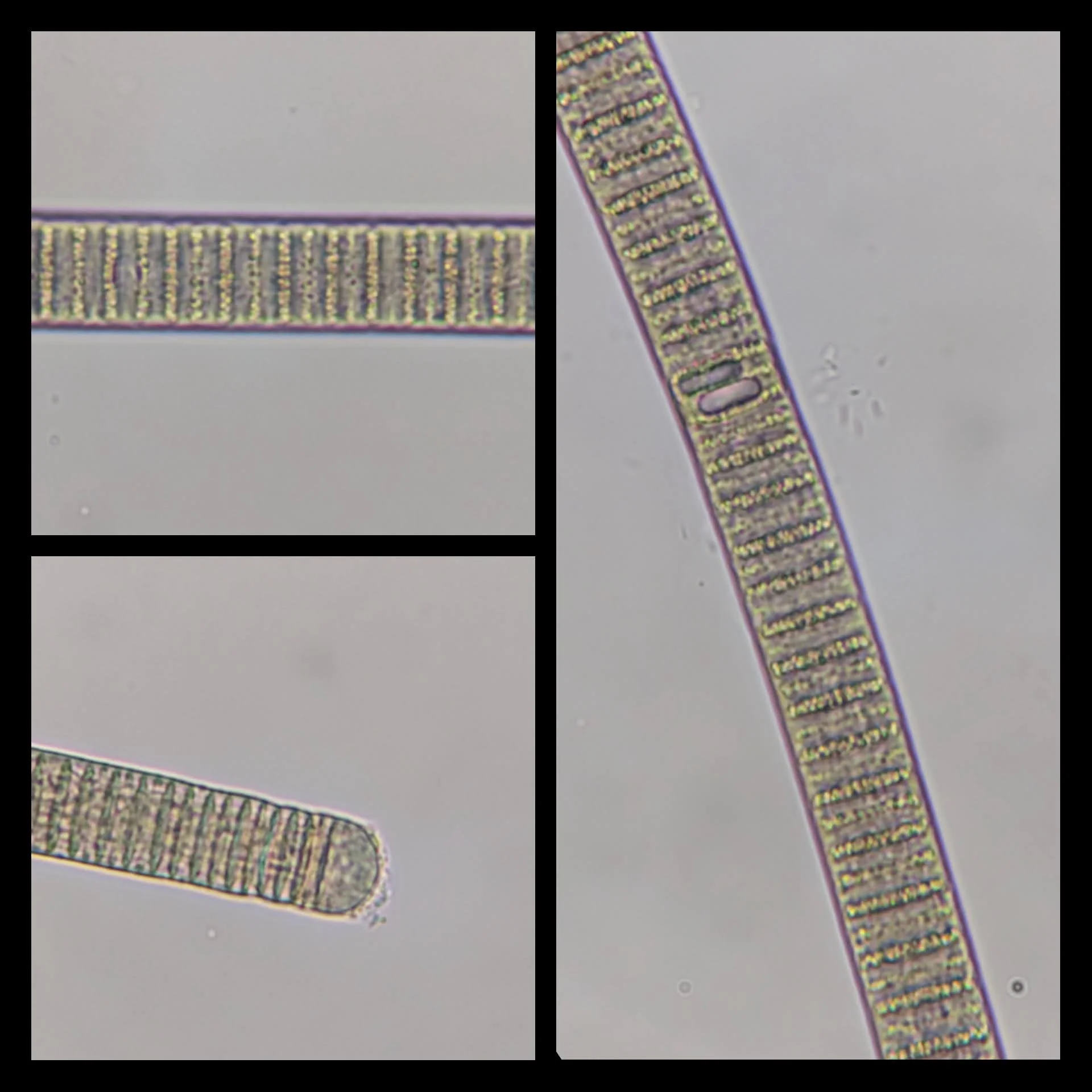
These cyanobacteria were in the water sample from Lake Spokane. Photo courtesy of Dr. DeSouza
Algae blooms tell us more about the water beyond whether it will sicken recreationalists and pets. It is a key indicator of water quality because waters with high nutrient levels often have cyanobacteria blooms, which can quickly become toxic. These blooms can then die and decompose, causing low levels of dissolved oxygen, killing fish and other aquatic species. Because of this, algae species and density is suggested as a way to monitor the improving health of Lake Spokane. The Spokane region has worked hard to prevent these blooms, phasing out phosphorous in their detergents and spending millions of dollars at local wastewater treatment plants and other industrial dischargers to reduce phosphorous.
This has made a measurable difference in Lake Spokane, with phosphorous levels dropping over 90% recently. Although the dissolved oxygen is not quite at levels that are healthy for native trout and salmon, it is expected to get better.
The state is also initiating a rulemaking to set a water quality standard for some of these algae, and without effective monitoring that standard cant be enforced. If you see an algae bloom, or any other pollution, take a photo and send it to our pollution reporting hotline.