
Originally published in The Spokesman-Review on April 26, 2026.
By Greg Gordon and Katelyn Scott
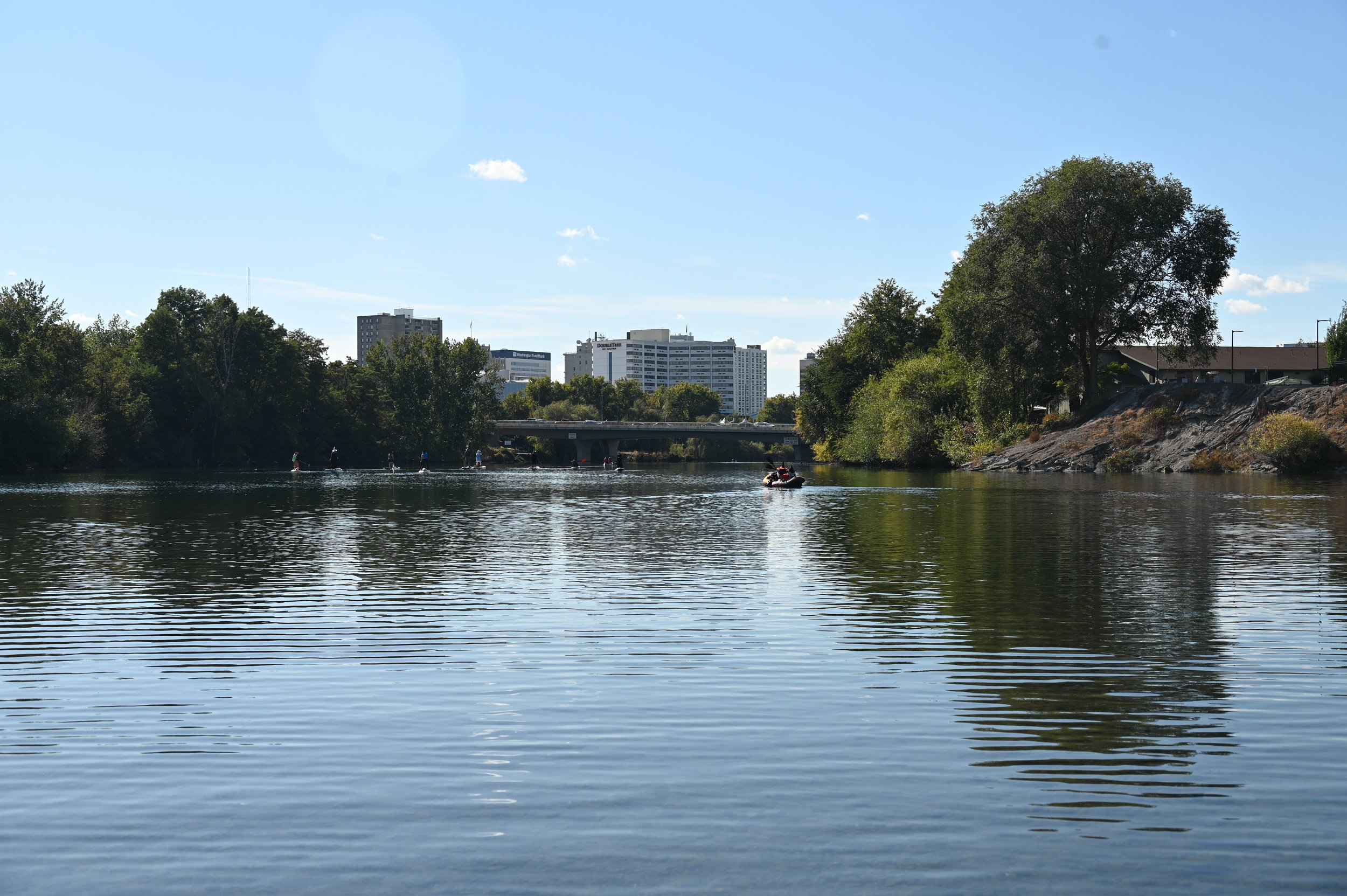
Flowing through the heart of our city, the Spokane River serves as the cultural, economic and ecological cornerstone of the region. Visitors and residents alike delight in stunning views of the falls and ride, stroll or run along the Centennial Trail. Even our main north-south roads offer views overlooking the river. While the river is a public resource, a few individuals seek to privatize and exploit one of the most visible sections of the river by building a giant party platform in the main channel.
The proposed 2,000-square-foot Ruby River Hotel dock just upstream from the Division Street bridge would dominate the riverscape, obstruct views up and downstream, adversely affect native fish, create streamside congestion, cause safety hazards and is unnecessary.
Proponents of this ill-conceived project contend that the dock would enhance nonmotorized river access, primarily for kayaks and paddleboards. However, as anyone who has ever attempted to enter or exit from a kayak or paddleboard from a dock can attest, this is a difficult and hazardous maneuver, especially when the dock sits in the main channel just upstream from the Avista Upper Falls Dam. A dock access at this location is unnecessary as there already is a better, safer and easier access just across the river under the Division Street bridge.
The construction of the dock would cause adverse ecological effects on the aquatic and riparian environments. This 94-foot long dock extending 64 feet into the channel would require concrete abutments on the shoreline, concrete and steel anchors in the riverbed, and diversion of the river during construction. Particularly notable are the long-term impacts to native redband trout and suckers which have been documented to use this location for spawning. The dock would also provide habitat for invasive small-mouth bass, which prey upon juvenile trout. Despite all of these significant environmental impacts the city issued a Determination of Non-Significance instead of requiring an environmental analysis.
The process by which the city approved the permit for the dock appears unlawful as the city failed to notify the affected neighborhood councils as required by city code. Although the planning department has admitted the error and promises to do better, the city insists on moving forward with the permit, denying any opportunity for appeal. Given the lack of public notification and genuine and timely community engagement, residents of the affected neighborhoods and anyone concerned about the fate of the river could contact the mayor’s office and insist the city restart the process from the beginning and do it right.
The Shoreline Master Program calls for shoreline access projects that increase the public’s connection to the river while protecting its ecological and scenic values. Yet this project fails to meet these objectives. The proposed dock would privatize the river’s visual corridor, occupy navigable public waters, and introduce safety hazards, while failing to provide the infrastructure necessary for genuine or meaningful public access. Additionally, the dock would be accessed by a gangway across a steep embankment, the slope of which will vary as the river rises or falls. It is unclear that this design conforms to ADA guidelines, potentially excluding community members with disabilities and failing to meet public access goals and requirements.
While there is a need for increased river access, the public did not ask for this dock. Given that it fails to provide any public benefit, its purpose seems to be to provide a place for expensive cocktails for the Osprey restaurant and a launch site for pontoon boat tours. In contrast to the dock, the proposed Iron Bridge access just upstream includes extensive public participation, provides parking, ADA access, ecological restoration and meets the nonmotorized recreational needs of the community.
Finally, this proposed dock would have significant visual impacts and dominate the riverscape from Division Street to the Kardong Bridge, one of the most heavily used and visually iconic stretches of the river corridor. Preserving these unobstructed views of the river and the skyline is essential to maintaining the visual quality and identity of our city’s core. A dock of this scale introduces a permanent structural encroachment, interrupts open-water views and sets a precedent for additional in-water development in one of the city’s most constrained and valued riverfront segments.
Ultimately the issue comes down to what does the Spokane River mean to our community? Does it simply exist for our amusement, as the party platform suggests, or does the river mean something more?
Attorney Katelyn Scott, of Wellpinit, is the water protector for Spokane Riverkeeper where she leads the Clean Water Defense and River Flow Protection programs. Greg Gordon is a professor of Environmental Studies and Sciences at Gonzaga University and lives in Spokane. He is the editor of “Rewilding the Urban Frontier: River Conservation in the Anthropocene.”