
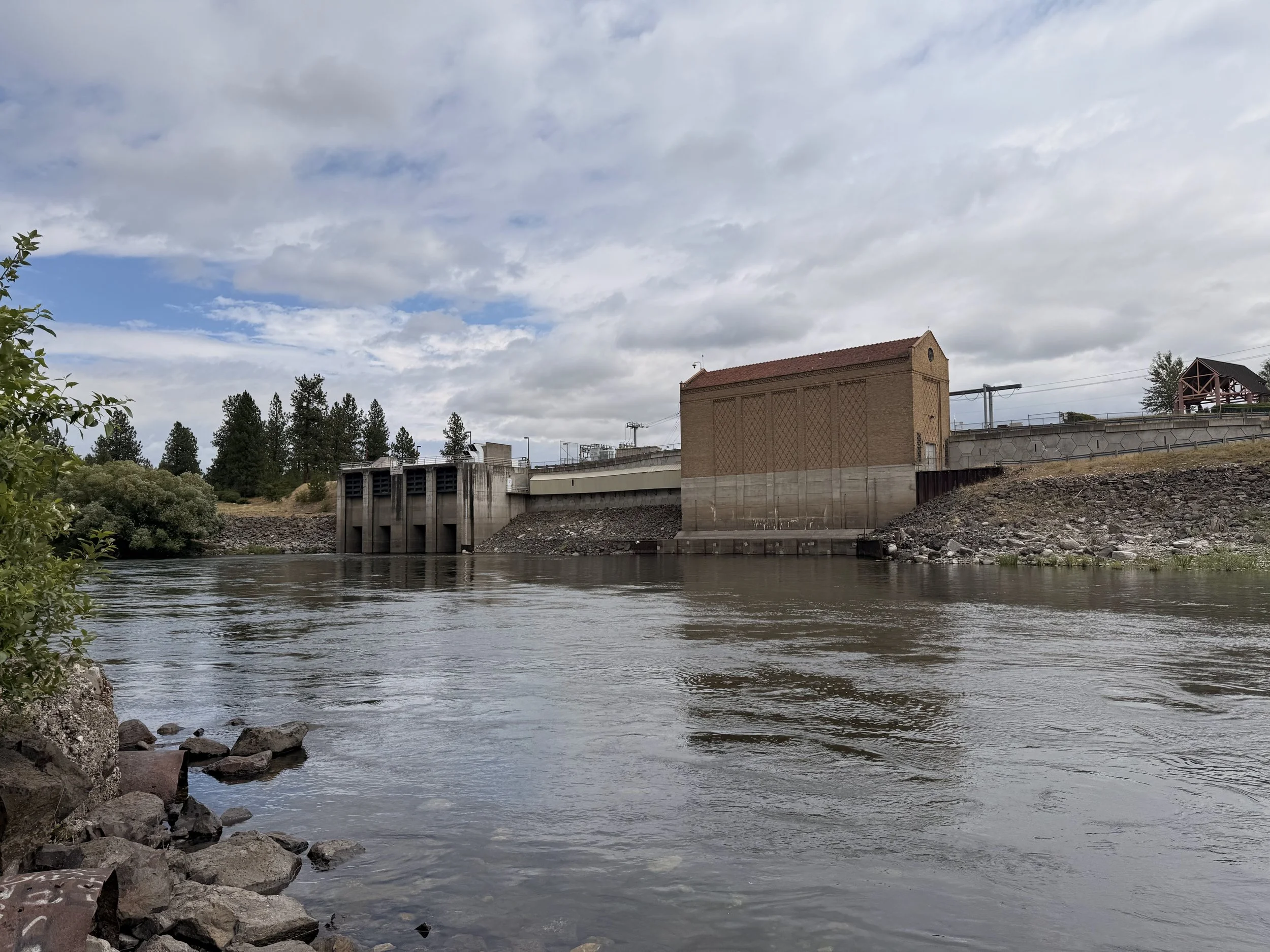
The Upriver Dam relicensing process is moving into an important stage: deciding what we need to learn about the dam, the river, and the resources that could be affected by its continued operation. The City has now filed its Proposed Study Plan, laying out the studies the City proposes to conduct during relicensing.
Earlier this year, Spokane Riverkeeper submitted comments on the City of Spokane’s Pre-Application Document, along with study requests identifying information we believe is needed to understand the river today and inform the next license. In total, the City received 33 different study requests. The studies we requested cover impacts we’re concerned about with water quality, fish, river flows, habitat, sediment, and shoreline conditions.
This is an important point in the process, but it is not the final study plan. The Proposed Study Plan is now open for public comment, and a study plan meeting will be held October 14 from 1:30-4:30 p.m at the Northeast Community Center (4001 N Cook St), Spokane, Washington. The meeting is open to the public, and all licensing participants are encouraged to attend. Participants have an opportunity to weigh in on the proposed studies and continue working through what information is needed before the plan is revised and ultimately submitted to FERC for a final determination.
What’s Happened So Far
The relicensing process began with FERC’s scoping process, which gave agencies, Tribes, organizations, and the public an opportunity to identify the issues they believe should be considered as Upriver Dam is relicensed. In response to the comments on the initial scoping documents, FERC added geology and soils, as well as the effects of continued project operation and maintenance on shoreline erosion and sediment transport downstream of Upriver Dam, to the issues that will be considered in the environmental review.
From there, the City developed its Pre-Application Document, and Spokane Riverkeeper submitted comments on that document along with specific requests for studies we believe are needed to better understand the river and the project’s effects.Our comments called for a more complete and current picture of existing river conditions and the Project’s impacts, including cumulative impacts across the Spokane River system. We also emphasized the need for meaningful public and Tribal engagement throughout the process, opportunities to improve ecological performance and climate resilience, and a relicensing process that produces enough information to inform strong protection, mitigation, and enhancement measures.
We also raised specific concerns about conditions in the Upriver reservoir and river, including the expansion of non-native warm-water predators and its implications for native Redband Trout, as well as opportunities to improve recreation and public access. Finally, we asked FERC to consider a 30-year license term so that project impacts and resource conditions can be reassessed on a more regular basis.
We also submitted five specific study requests focused on the information we believe is still needed to understand the river and the Project’s impacts. Those study requests are the focus of the next stage of the process.
Our Study Requests
Our study requests focused on questions we believe are important for understanding the river and evaluating the effects of continued operation of Upriver Dam: redband trout habitat and populations, water quality, water flow, and water availability.
Trout and aquatic habitat
We asked for updated information about Redband Trout populations and behavior in the project area, including where fish are found, how they use available habitat, and how they move through the river. We also raised the need to better understand the aquatic community more broadly, including macroinvertebrates. Together, this information would help establish a clearer picture of current river health and the conditions supporting native fish.
Water quality and contaminants
We asked for additional information about water quality, including summer temperature conditions, dissolved oxygen, and legacy contaminants and sediment. Upriver Dam is located within a river system with a long history of contamination, including PCBs, and understanding current conditions is important for evaluating how those conditions interact with the project and its continued operation. Our comments also emphasized the need for current information rather than relying primarily on older datasets.
Flow, groundwater, and pumping
We asked for a closer look at the relationship between summer river flows, groundwater, water temperature, and municipal pumping from the Spokane Valley Rathdrum Prairie Aquifer. These systems are deeply connected, particularly during the low-flow season, so understanding those relationships is important for understanding the conditions the river experiences during its most vulnerable time of year. We also asked that the analysis consider future low-flow conditions and climate change.
What’s in the Proposed Study Plan
The City’s Proposed Study Plan includes several studies that overlap with the questions we raised, but not all of the issues we raised are addressed in this plan.
For water quality, the City is proposing a Water Quality Monitoring Study that would collect information on conditions including temperature and dissolved oxygen. The City is also proposing a Bypass Channel Characterization Study to evaluate habitat and connectivity in the bypass channel downstream of Upriver Dam. These studies will provide important information about current conditions in and around the Project area.
For aquatic resources, the proposed studies include habitat evaluations using Redband Trout and Mountain Whitefish habitat criteria. This will provide information about habitat suitability and connectivity, although it does not include the broader Redband Trout population and behavior study we requested. The City is also not proposing a separate macroinvertebrate study.
The City is not proposing additional sediment and contaminant studies, pointing to the substantial existing information on PCB contamination, past sediment investigations, and ongoing cleanup and monitoring at the Upriver Dam PCB Sediment Site.
The biggest gap for us is the question of flow, groundwater, and municipal pumping. The City is not proposing to conduct any analysis to better understand how municipal groundwater pumping may affect late-summer Spokane River flows. The City’s position is that these questions are outside the scope of the Project because Upriver Dam operates as a run-of-river facility and does not control the amount of water entering the Project.
However, this facility was built to power the City’s water pumping system, and the amount of water pumped directly impacts the need to produce power at this facility. More broadly, FERC relicensing precedent demonstrates that the relationship between a hydropower project and water supply can be relevant to licensing even where water supply is not itself a purpose of the licensed project. For example, the relicensing of the Catawba-Wateree Project incorporated measures addressing low inflow conditions and water-use reductions among water users, recognizing the interconnected relationship between project operations, water availability, and municipal water supply. This provides a useful precedent for considering how the operation of Upriver Dam is connected to the City’s water use and the broader flow regime of the Spokane River.
What We’re Looking At Now
The Proposed Study Plan is not the final study plan. It is the City’s proposal for what should be studied, and this is an opportunity for agencies, Tribes, organizations, and members of the public to weigh in before the plan moves forward.
Spokane Riverkeeper will be reviewing the proposed studies closely and participating in the October 14 Proposed Study Plan meeting. We will be looking at both what is included and what is missing, with particular attention to whether the studies will give us the information needed to understand current river conditions, protect native fish and aquatic habitat, and evaluate the factors shaping water quality and flows.
We will also be looking closely at the explanations for studies the City has not proposed to adopt. The questions we raised about groundwater and pumping, Redband Trout populations and behavior, and additional water quality and contaminant information remain important questions for the long-term health of the river. The Proposed Study Plan gives us an opportunity to continue making the case for the information needed to answer them.
What happens next?
The Proposed Study Plan is now open for public comment. The next opportunity to engage in person will be the Initial Proposed Study Plan Meeting on October 14. Written comments on the proposed plan will be accepted through December 20, 2026.
After the Proposed Study Plan meeting and comment period, the City will share a Revised Study Plan, and FERC will then make a Study Plan Determination that establishes the studies that will move forward.
The studies themselves will ultimately give us a much more detailed picture of the river, the dam, and the resources affected by the project. That information will become part of the record used to evaluate the next license for Upriver Dam.