
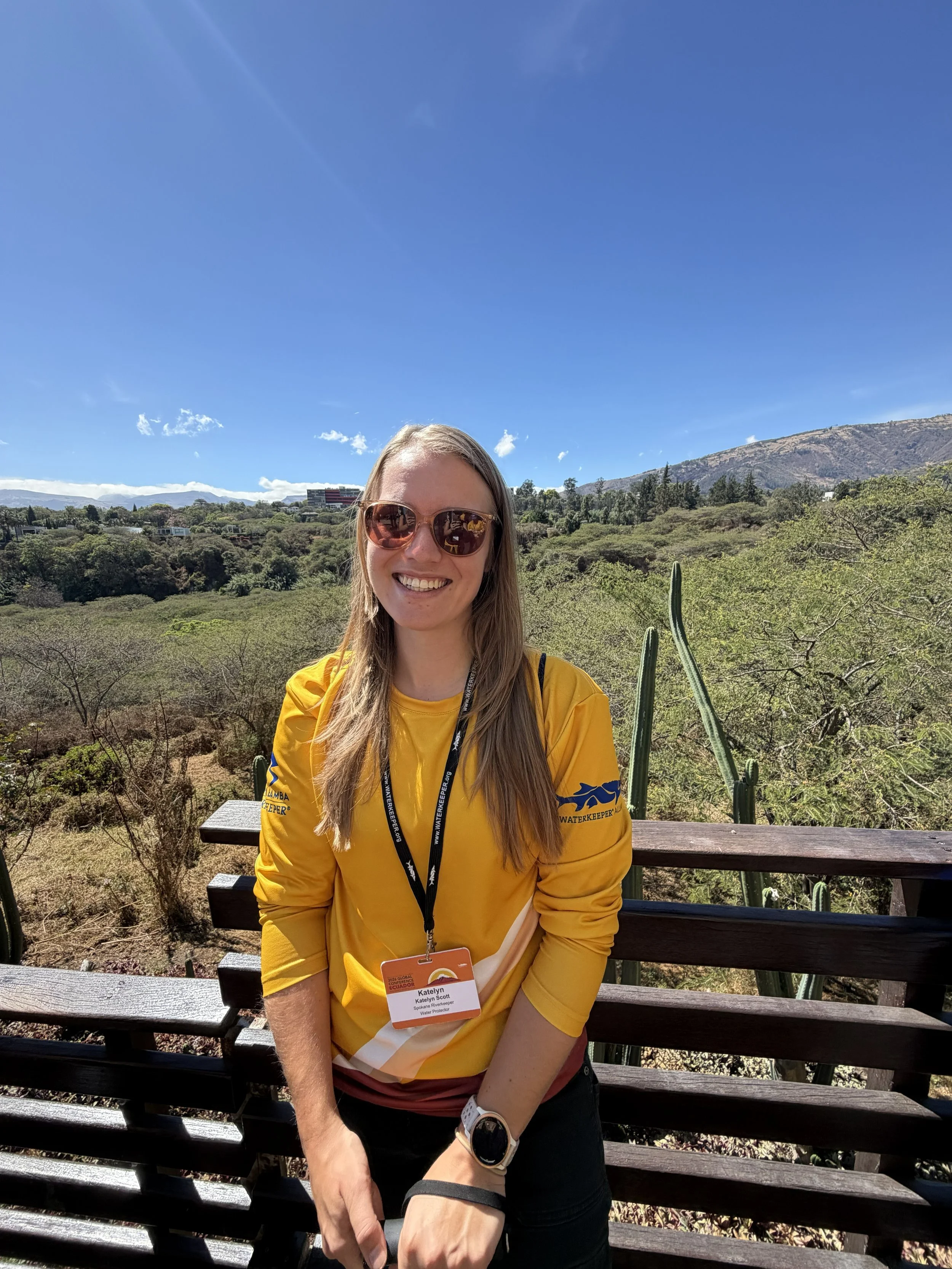
Last week, I had the absolute pleasure of spending time in Quito, Ecuador, for the Waterkeeper Alliance conference. This was only my second conference with the Alliance, and I came home with a list of ideas for our programs, a much longer list of people I want to stay connected with, and a renewed appreciation for just how global this movement really is.
The Waterkeeper Alliance is a global network of Waterkeeper organizations working to protect waterways and the communities that depend on them. Spokane Riverkeeper is part of that network, alongside hundreds of Waterkeepers around the world. The global conference brings those organizations together to share knowledge, build relationships, learn from one another, and strengthen the collective work of protecting our waters.
This year, that gathering took place in Quito, Ecuador. We came from different watersheds, different cultures, and different communities, but with a shared commitment to protecting clean water.
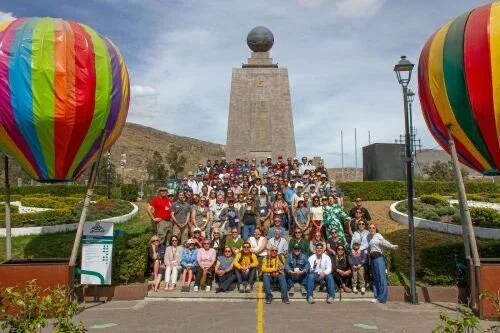
Center of the World
During the conference, the Ottawa Waterkeeper shared a phrase that became a sort of drumbeat for the week: “You are alive at just the right moment to change everything.” It was offered as a reminder that all of us in that room were there for a purpose. We each have a role to play in what happens next.
That was a powerful message to hear in a room full of people doing work that can be, frankly, pretty heavy. We spend a lot of our time talking about pollution, habitat loss, climate change, regulatory failures, and the many ways our rivers are being asked to do more than they can sustain. It is easy for this work to become defined by what is going wrong.
But in Quito, there was a real sense of hope and possibility alongside the hard conversations. Not an optimism that ignores the challenges, but a reminder that we are here, now, and that we have an opportunity to shape what comes next. And that we are the right people for the work that needs done right now.
Learning from one another
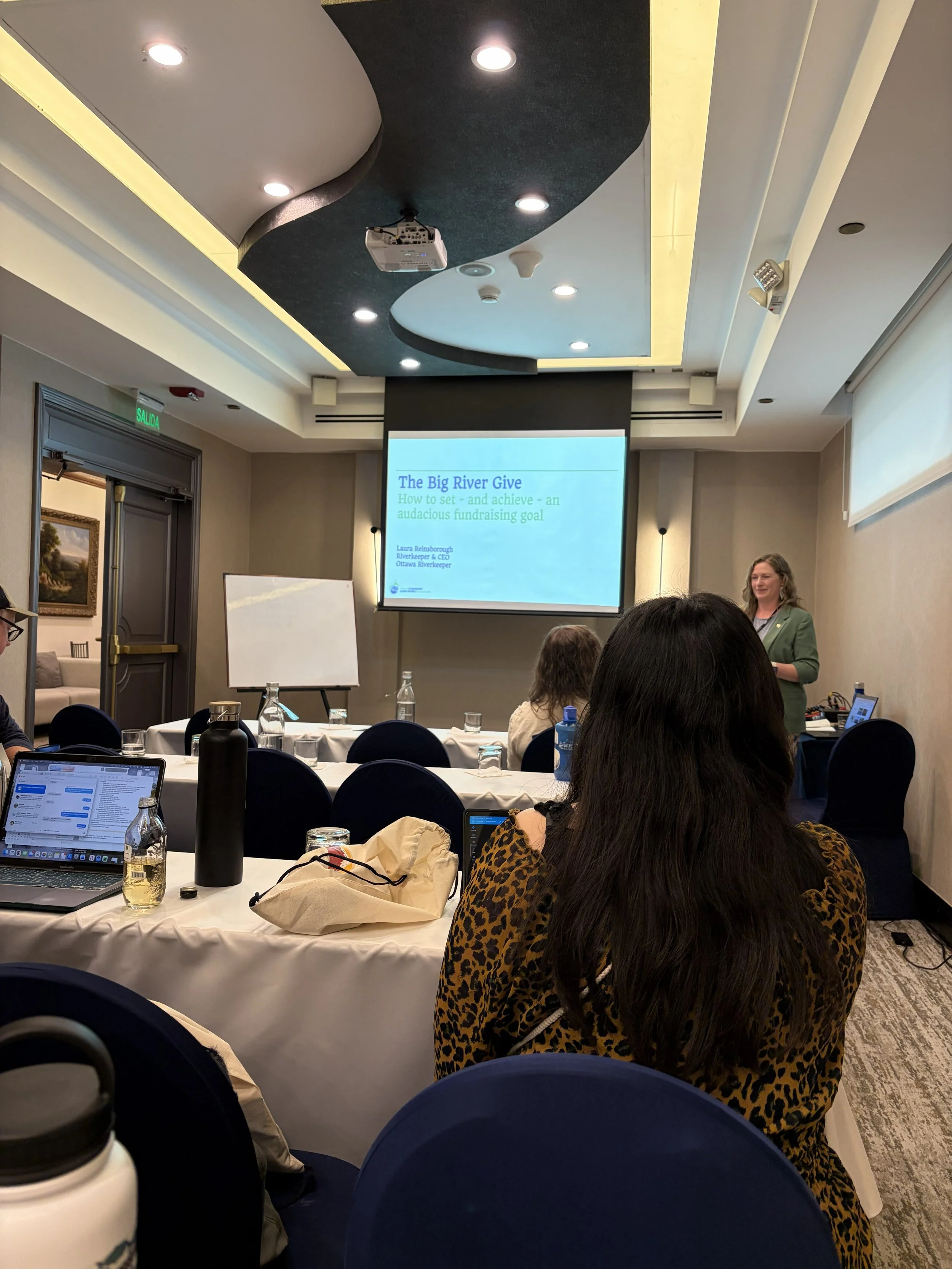
There was a lot to learn throughout the week. I attended sessions on the power of education, audacious fundraising, community pollution patrols, and storytelling as a tool for water stewardship. We talked about investing in education at a community level, bringing more people into philanthropy, using community science for advocacy, and helping people of all ages connect emotionally to the waterways they are working to protect.
Sharing practical knowledge with one another is one of the incredible values of being part of the Waterkeeper Alliance. Someone else's experience can give you a new way to approach a problem at home. A community science project in one watershed can spark an idea in another. A fundraising strategy can change how an organization thinks about its own growth. A story from another river can help us see our own river differently.
There was a constant exchange of ideas, experience, and practical tools throughout the week, and I am excited to bring some of those ideas back to Spokane.
But as valuable as those sessions were, I think the deeper value of the conference came from the connections between them.
A global movement you can feel
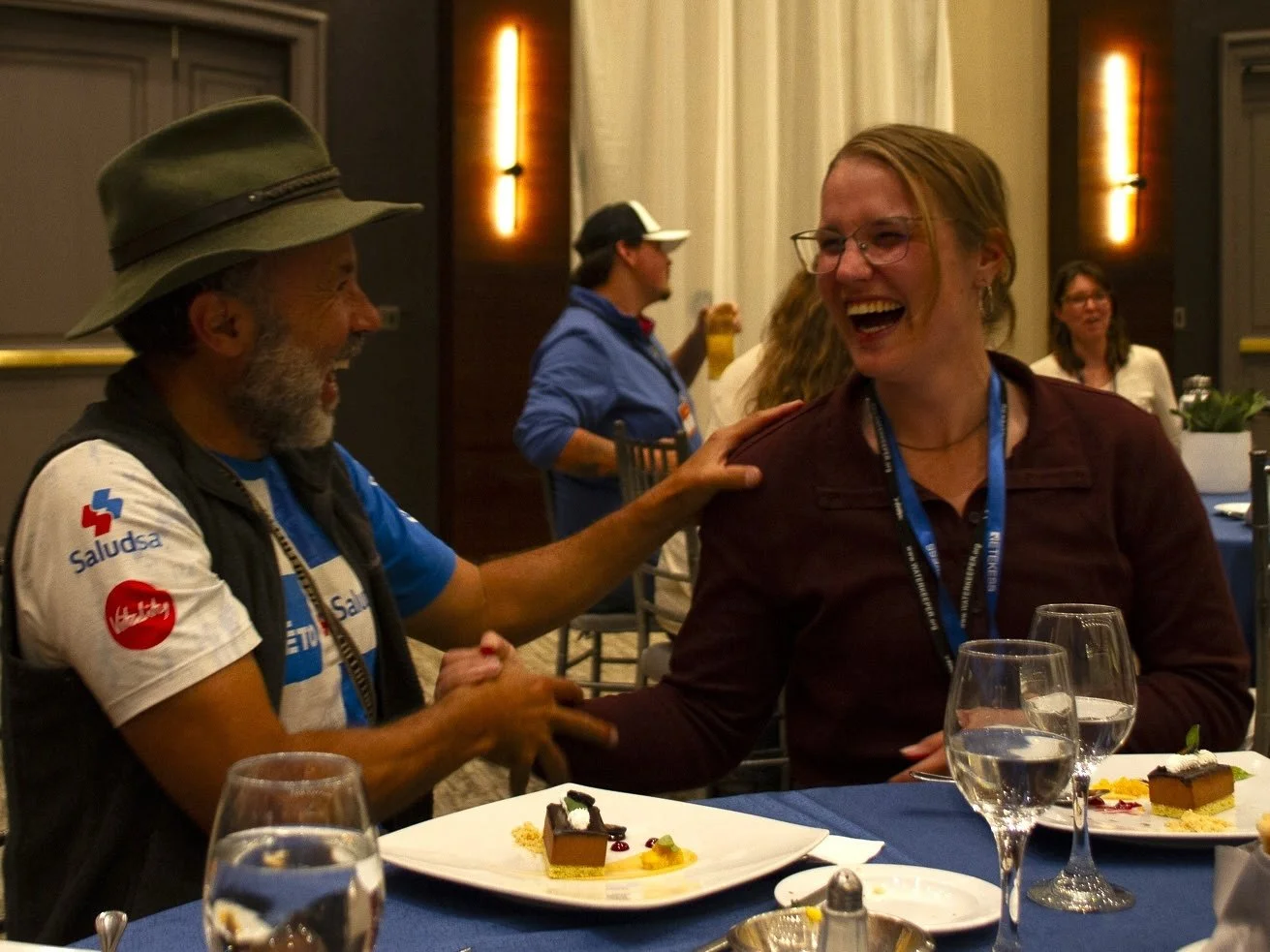
Katelyn laughing over dinner with Luis, from Quito
There were Waterkeepers in the room from Latin America, Asia, the United States, and many other communities around the world. We came from different cultures and different watersheds, with different political and legal systems shaping the work we do. But we all face many of the same challenges.
One of the most interesting things about the conference is realizing how many of the problems that can feel so unique at home are actually shared across this community. Many of the issues we face in Spokane are also happening in Ecuador and in other communities around the world. The details may look different, but the underlying questions are often the same.
In Quito, for example, we saw the impact of untreated wastewater discharging to the rivers and the difficulty of getting the investment needed to protect and restore the river when those costs are seen as too high. The Guayllabamba Riverkeeper has brought litigation to try and force the government officials to invest in water treatment. Here, too, we have had to use litigation to push municipal governments to meet their obligations and clean up waste that is harming our river.
Even in places with very different legal frameworks, we are facing the same challenges. Ecuador has constitutional rights for nature, yet having strong laws on paper does not automatically mean their rivers receive the protection or investment they need. Laws and regulations matter, but communities still have to organize, advocate, and sometimes litigate to make sure those protections actually translate into action.
That is the strength of this network too. We can look at problems that seem specific to our own watershed and recognize them in communities thousands of miles away. We can learn from one another, share what is working to cleanup and prevent pollution, and see possibilities that might be harder to see when we are working in isolation.
The connections that grow at the conference are a strong reminder that this movement is truly global. Some of that connection happened in the sessions, sharing lessons learned in structured discussions. But a lot more of it happens in the conversations between sessions, over meals, while exploring Quito, and in the moments when we simply sat together and talked about their rivers and communities.
But one of the most powerful expressions of that connection was the Minga.
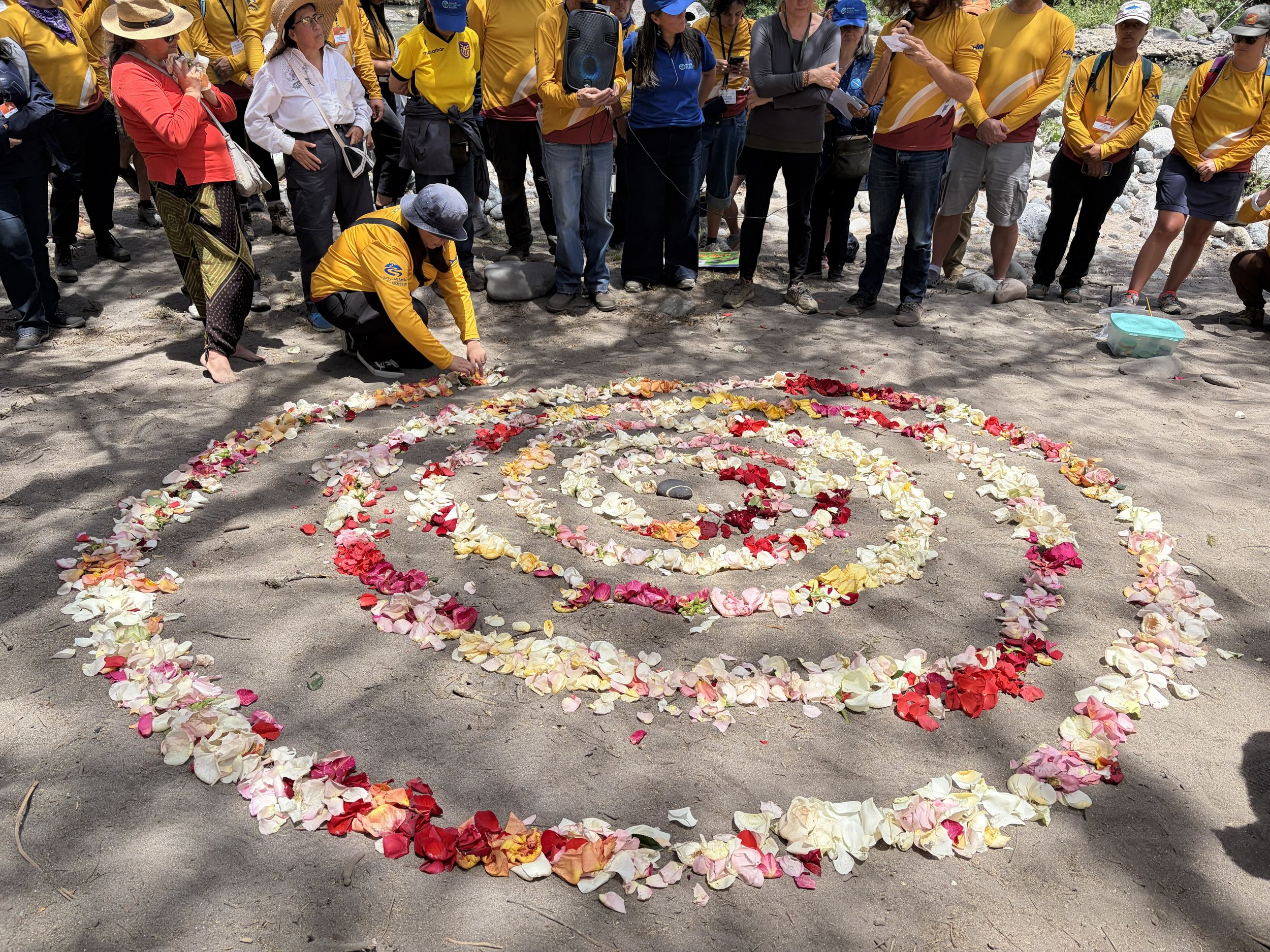
The Minga is a tradition of collective work and community action, rooted in the idea that people come together to care for something that belongs to all of us. At the conference, the Minga was designed to bring all of the watersheds represented at the conference together for collective global action. At the end of the Minga, we took part in a ceremony to bless the river and our global waters.
Through the ceremony, we were invited to spiritually bring the waters we each work to protect to the shores of the Guayllabamba River, where we gathered to bless the water. We were invited to think about the water we carry within our own bodies, and that water we drink can remain with us for roughly two months. In a very literal sense, our waterways were with us in Ecuador. It was a beautiful way of making the global nature of this work tangible. We may spend our days protecting different rivers, lakes, and coastlines, but we are all part of the same larger water system and the same movement to protect it.
For me, this was also a grounding part of the week. So much of my day-to-day work happens in permits, paperwork, regulations, and legal strategy. Those things are important, but they can sometimes make it easy to lose sight of the river at the center of all of it. The Minga created space to literally step outside for a moment and reconnect with the water itself, and with why we are here doing this work in the first place.
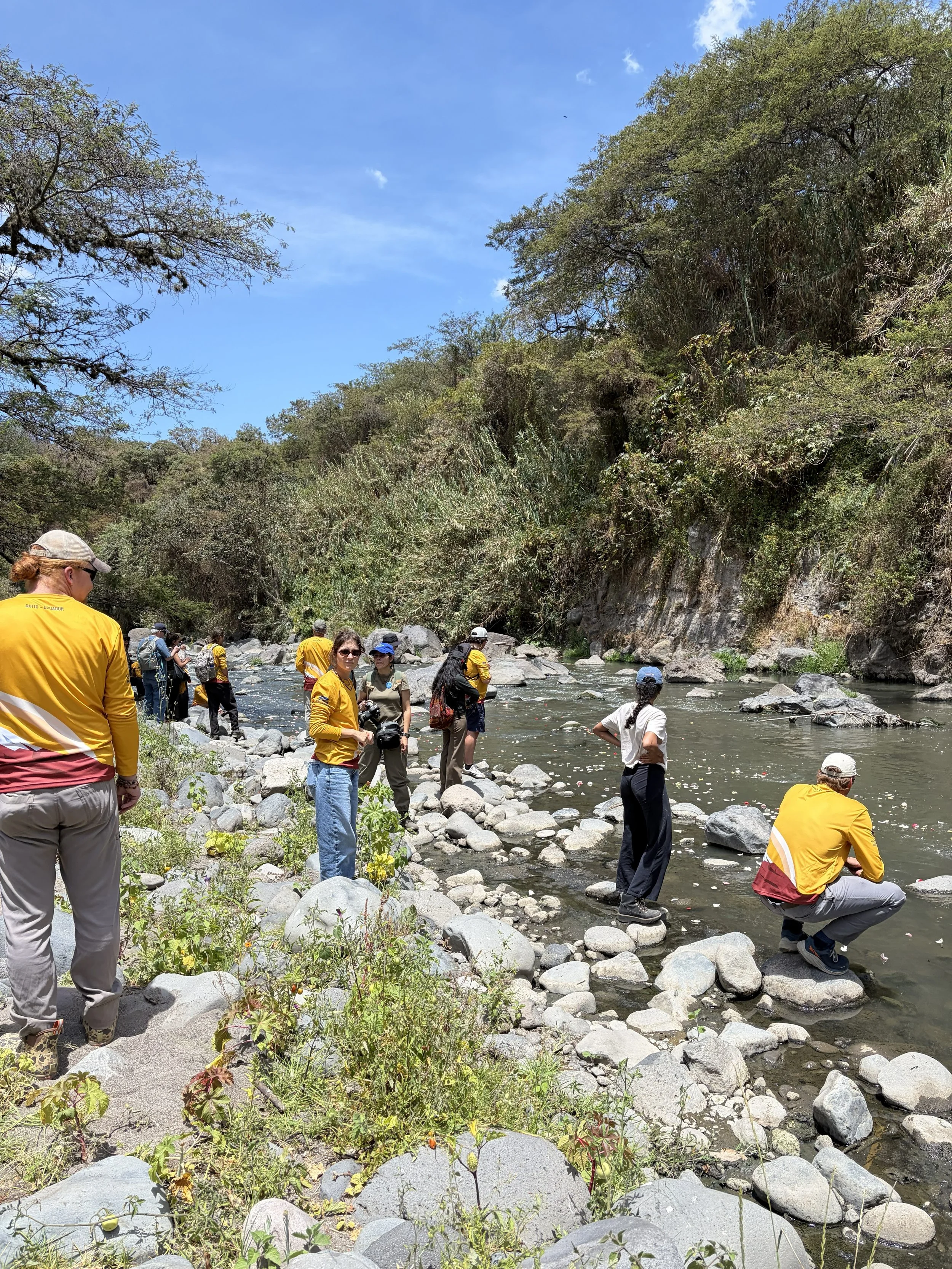
While sitting beside the river we contemplated: What does it mean to listen to a river? Listening to a river means paying attention to the science. It means measuring what is happening and understanding the systems that shape a watershed.
But it can also mean listening to the people who live alongside that river. Listening to community knowledge and experience. Listening to the stories people carry. And listening to our own connection to the water around us.
The Minga brought that idea to life in a way that a presentation in a conference room never could. For a moment, all of the waters we each work to protect were brought together at the Guayllabamba River.
Bringing it home
I came home from Quito thinking a lot about what it means to be part of a movement like this.
There are obvious, practical reasons these gatherings matter. We come home with new ideas, new tools, new strategies, and new relationships that can strengthen our work. But there is something else that is harder to describe and even harder to measure. Being surrounded by people who are asking the same questions, facing many of the same challenges, and continuing to show up for their waterways is a powerful reminder that this work is bigger than any one person or any one river.
That is especially important after a year when so much of our work has felt urgent and heavy. The Spokane River is facing real challenges, and there is no shortage of reasons to be worried about what comes next. But Quito reminded me that hope is not the opposite of taking these problems seriously. Hope is part of what allows us to keep doing the work.
We need the science. We need the laws and regulations. We need the lawsuits when those systems fail. We need people willing to do the hard work of changing policy, cleaning up pollution, protecting habitat, and holding decision-makers accountable.
But we also need connection.
We need people to see themselves as part of their watershed and to understand that protecting water is something we all have a role in. We need to tell stories that help people care, create opportunities for people to participate, and build a community that feels ownership over the future of its river.
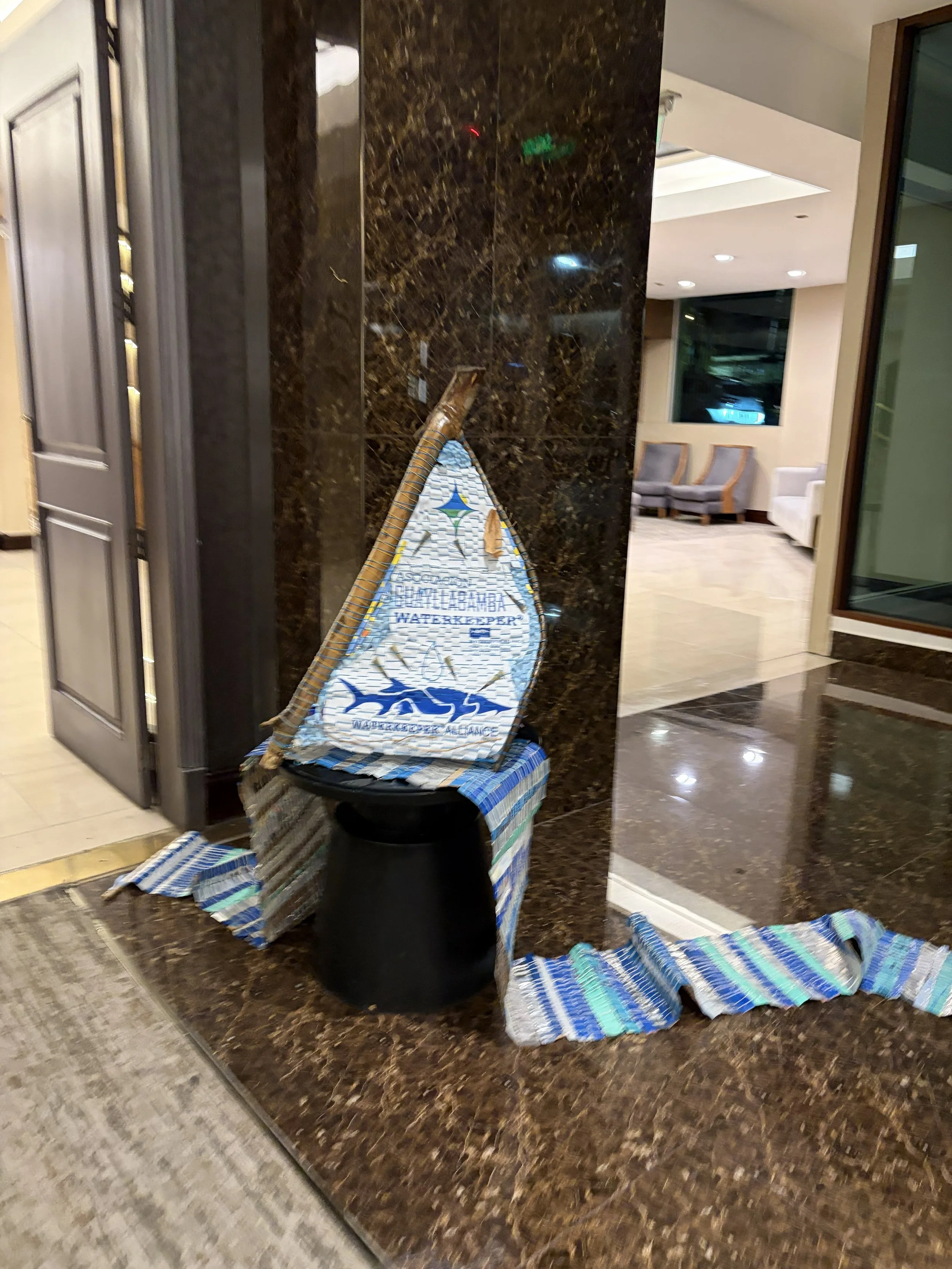
I am bringing home new ideas for Spokane Riverkeeper, but also a deeper sense of connection to the people doing this work around the world and to the water at the center of all of it.
And that brings me back to the words shared by the Ottawa Waterkeeper at the beginning of the week: “You are alive at just the right moment to change everything.”
After spending a week surrounded by people who have chosen to show up for their rivers, I hear that less as a promise that any one of us can change everything and more as an invitation. We are here. We are part of this moment. We are part of something bigger than ourselves. And we each have a role to play in what happens next.
I hope you find yourself in that message, too. You do not have to be a Waterkeeper, a scientist, a lawyer, or an advocate to have a role in protecting the water around you. You are already part of your watershed. You are already connected to the rivers, lakes, and waters that sustain your community.
You are alive at just the right moment to change things, too. And there is a place for you in the work of caring for the water we all depend on.
Together, for the River.