
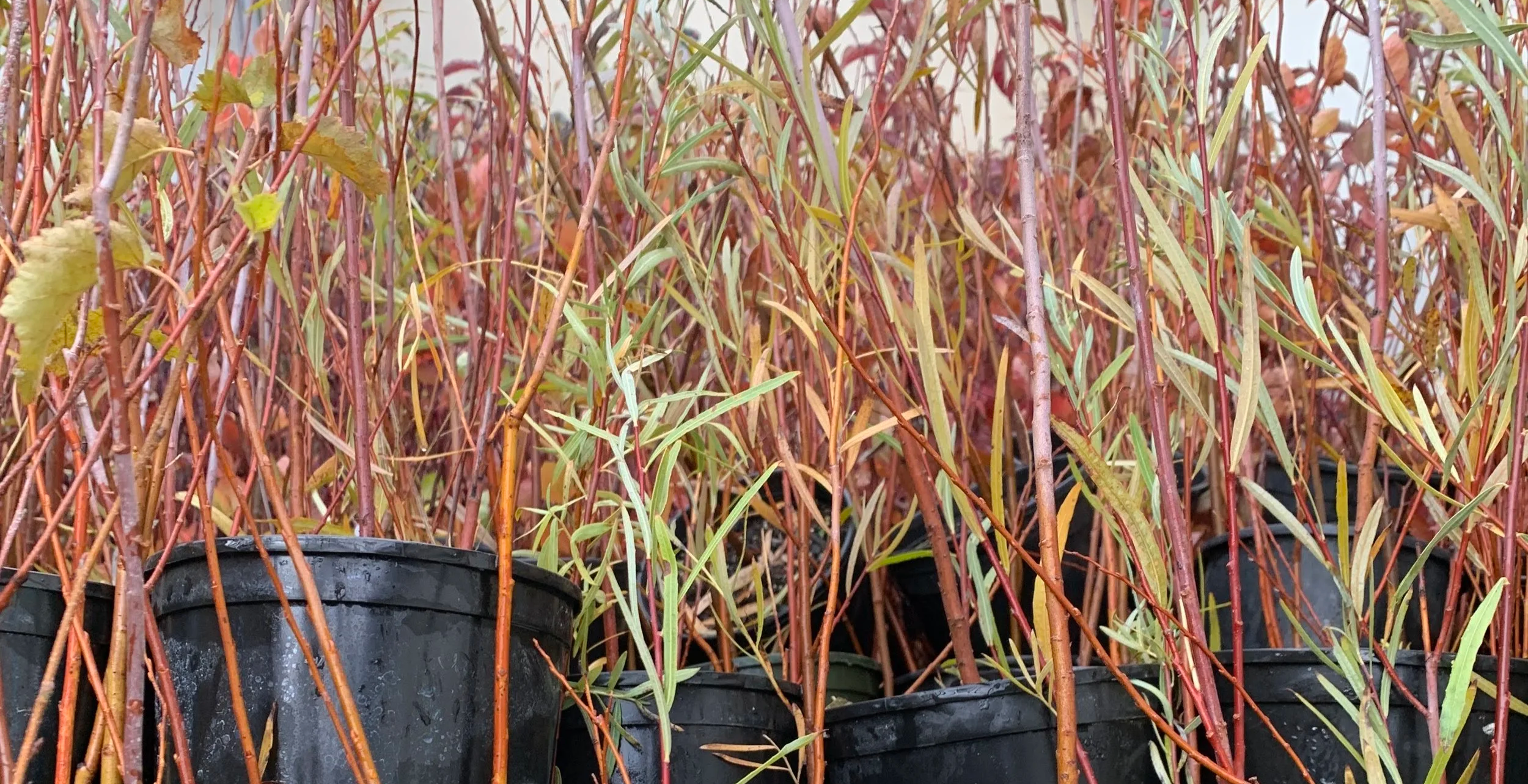
Hangman Creek, one of the Spokane River’s tributaries, is one of the most historically damaged creeks in Washington state. Land use practices in the watershed have straightened the creek, contributed massive amounts of erosion, and stripped the banks of riparian vegetation. Practically, this means poor water quality; lots of dirt in the water and high temperatures make the waters inhospitable for salmon and trout to spawn, rear, and migrate.
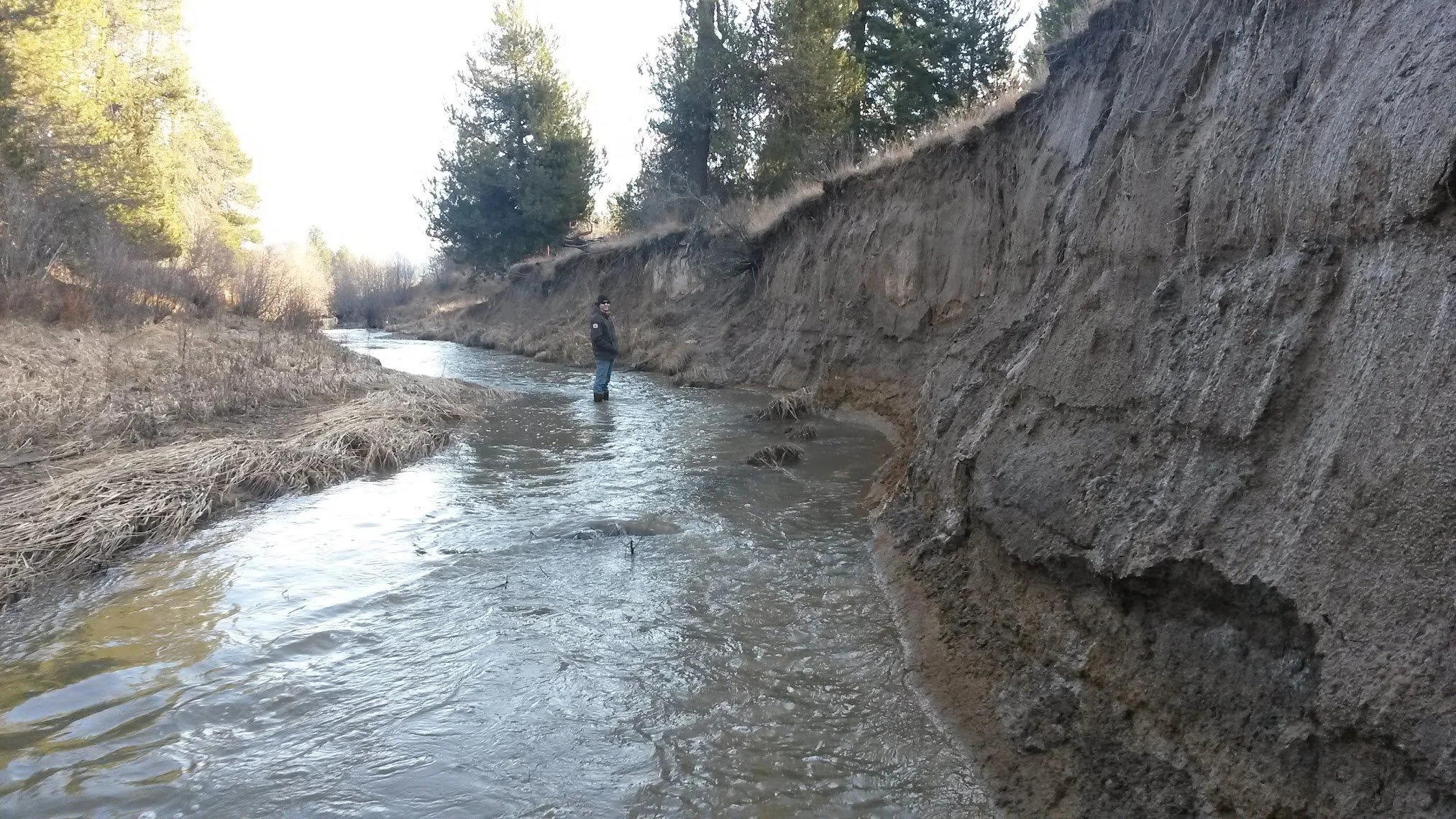
Eroding banks in Hangman Creek provide an ideal location for reed canary grass to recruit into.
Currently, Hangman Creek is undergoing a historically unprecedented period of restoration on its banks. Spokane Conservation District, the Coeur d’Alene Tribe, Spokane County, The Lands Council, Trout Unlimited, and even Spokane Riverkeeper are working on projects that create riparian habitat in the Hangman Creek basin in order to improve water quality. Planting streamside native vegetation improves water quality by stabilizing banks, filtering sediment and runoff, and shading banks to mediate water temperatures.
However, one impediment to these restoration efforts is an aggressive species, reed canary grass (Phalaris arundinacea). This is a fast-growing perennial grass, with both invasive and native populations in North America. However, genetic influence from populations introduced from Europe has led to dominance and expansion beyond its native range, and it is now widely considered invasive. It is able to rapidly outcompete many native species and establish dense monocultures through heavy seed production, shading of other plants, thick leaf litter, and a dense rhizome structure that can propagate new plants. Reed canary grass is particularly dominant in natural and disturbed wetlands. Hangman Creek’s flashy flow regime makes it an ideal locale for reed canary grass to recruit after erosion events. In much of the wetted perimeter, reed canary grass is the only species. This is problematic for wetland restoration since it is very difficult to establish other native plants or woody perennial vegetation in dense reed canary grass stands.
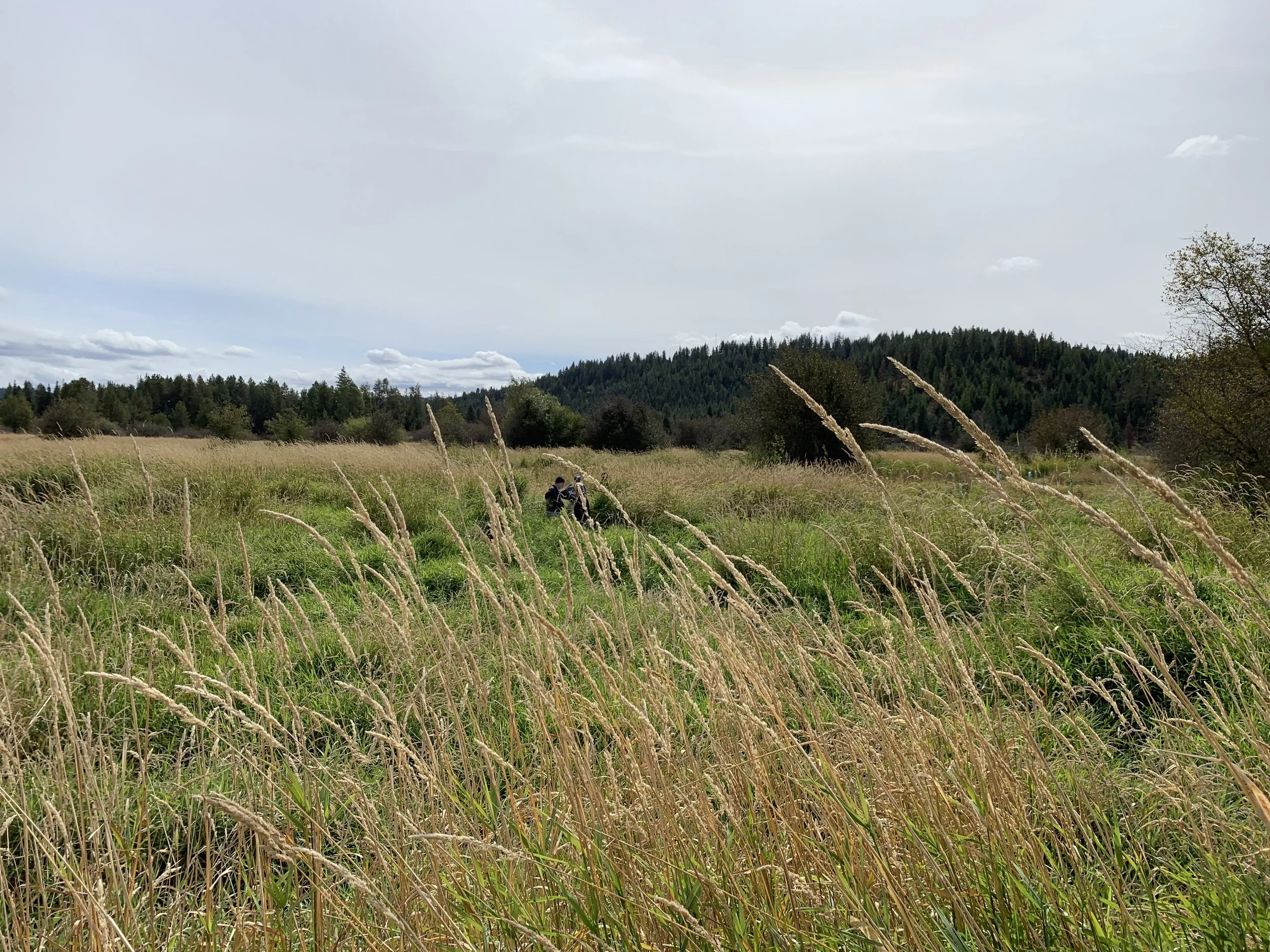
Reed canary grass dominates wetland systems as well as streambanks.
Current reed canary grass (RCG) management techniques often include energy-intensive mechanical treatments, or environmentally harmful chemical treatments. Because of their extensive rhizome system, RCG mechanical control requires very thorough removal by hand, chemical control (like glyphosate), or complete excavation of the area with machines like bulldozers. Overall, current methods of managing reed canary grass are intensive, expensive, and have a variety of environmental impacts.
However, research from the west side of the state shows that there may be another way to establish native vegetation in areas with dense reed canary grass. Scientists in Seattle have densely planted stakes of willows designed to restore wetlands, shade out reed canary grass, and provide habitat for local animals. Willows, in particular, are one plant that have shown much promise in competing with reed canary grass, even without site preparation or maintenance.
Locally, Spokane County Water Resources has planted willows in the Saltese wetlands, while the Coeur d’Alene Tribe and Spokane Conservation District are planting willows in the Hangman Creek Basin. Although many thousands of willows have been planted by these organizations over the years, there has been little quantification of willows’ effects on reed canary grass without intense mechanical or chemical site preparation.
Spokane Riverkeeper recently received a grant from the Washington State Department of Ecology to experiment with innovative restoration techniques in the Hangman Creek watershed. We plan to densely plant a variety of willow species without preparing sites with herbicides or mechanical RCG controls. This new program will quantify effects on reed canary grass densities over time, as well as monitoring tangible impacts on water quality.
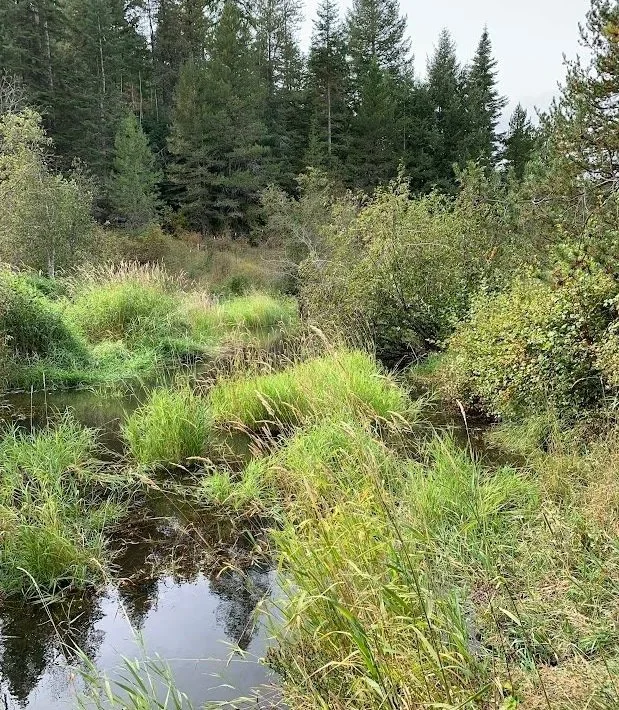
In healthy ecosystems, there are a variety of plant types, including woody vegetation such as willows, and perennial vegetation.
Thanks to the Coeur d’Alene Tribe and the Bonneville Power Administration, we already have a local source of native willow stakes for when planting season comes in the spring. Willows typically thrive in moist riparian environments and can grow quickly from dormant stakes, making them an apt choice for wetland reforestation. The live staking process is fairly simple, and there are many best management practices (BMPs) that have been developed to ensure willow survival and minimal site disturbance.
The ask:
Spokane Riverkeeper is currently seeking landowners and partners in the Hangman Creek basin! We are looking for land along Hangman Creek or its tributaries, especially dominated by reed canary grass, to utilize for restoration. This work could be combined with other riparian restoration efforts along the tributaries and mainstem of the creek. This project is completely free for landowners.
If you have interest in this project or any questions, please contact Lauren at [email protected].